Launch offer — valid today only

📄 Digital book in PDF · read it on your phone or print it

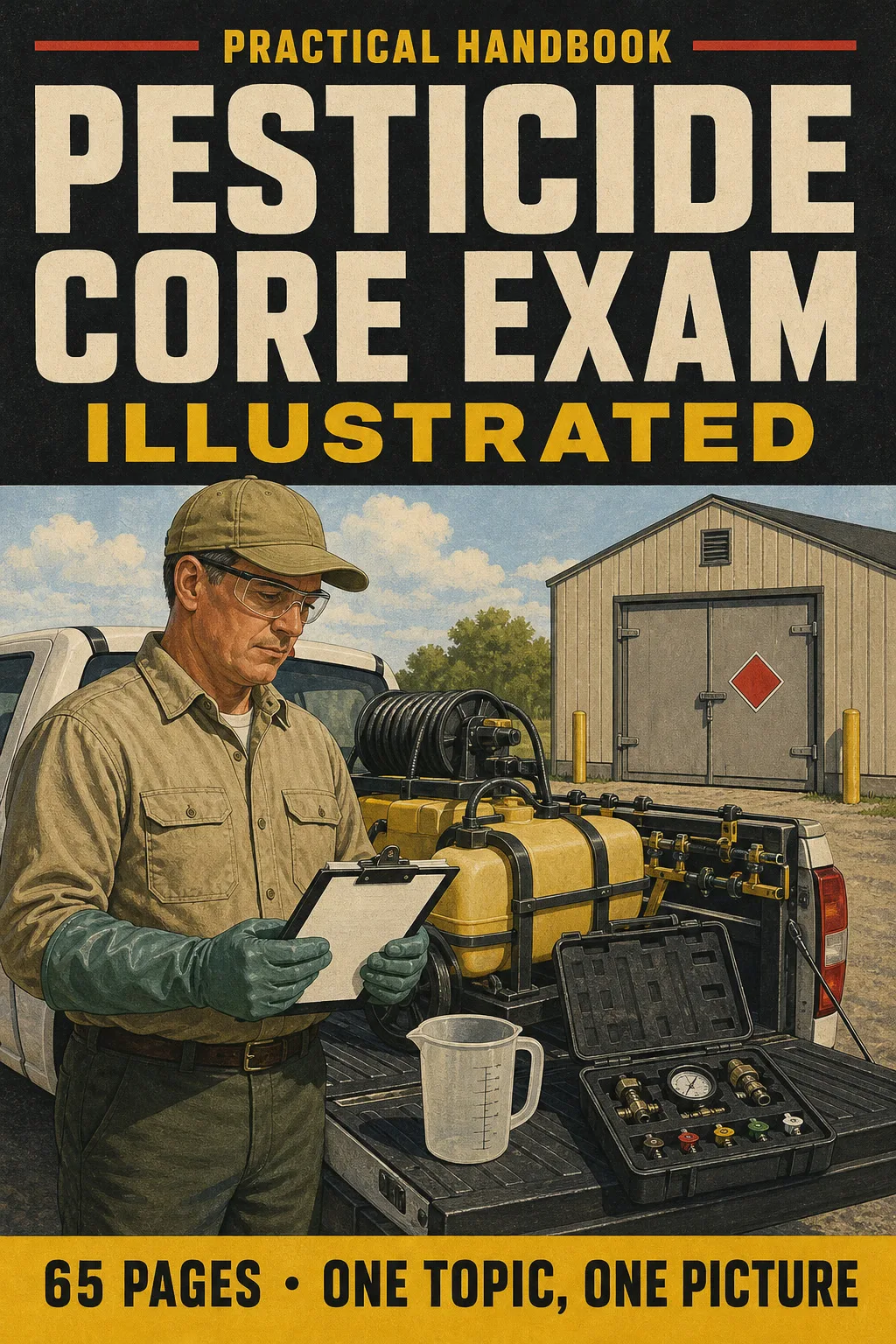
The Pesticide Core Exam, Drawn Page by Page One Topic on Every Page

The label part by part, signal words, LD50, PPE, formulations, triple rinse, drift and calibration math in gallons and acres. Each topic gets its own page: the drawing first, then what you need to remember. 65 illustrated pages.

START STUDYING THIS WAY

🔒 Secure checkout · PDF by email · 30-day guarantee

Every topic, its own pageEach label part, PPE step and tank calculation drawn, with the explanation right next to it
65 illustrated pages9 parts, from which license you need to the exam-day checklist
Up-to-date sourcesNational core manual, the federal certification rule (40 CFR Part 171) and FIFRA
PDF by emailFormat

Look Inside the Book

Every page has one big drawing and a box with the numbers and rules you need to know:

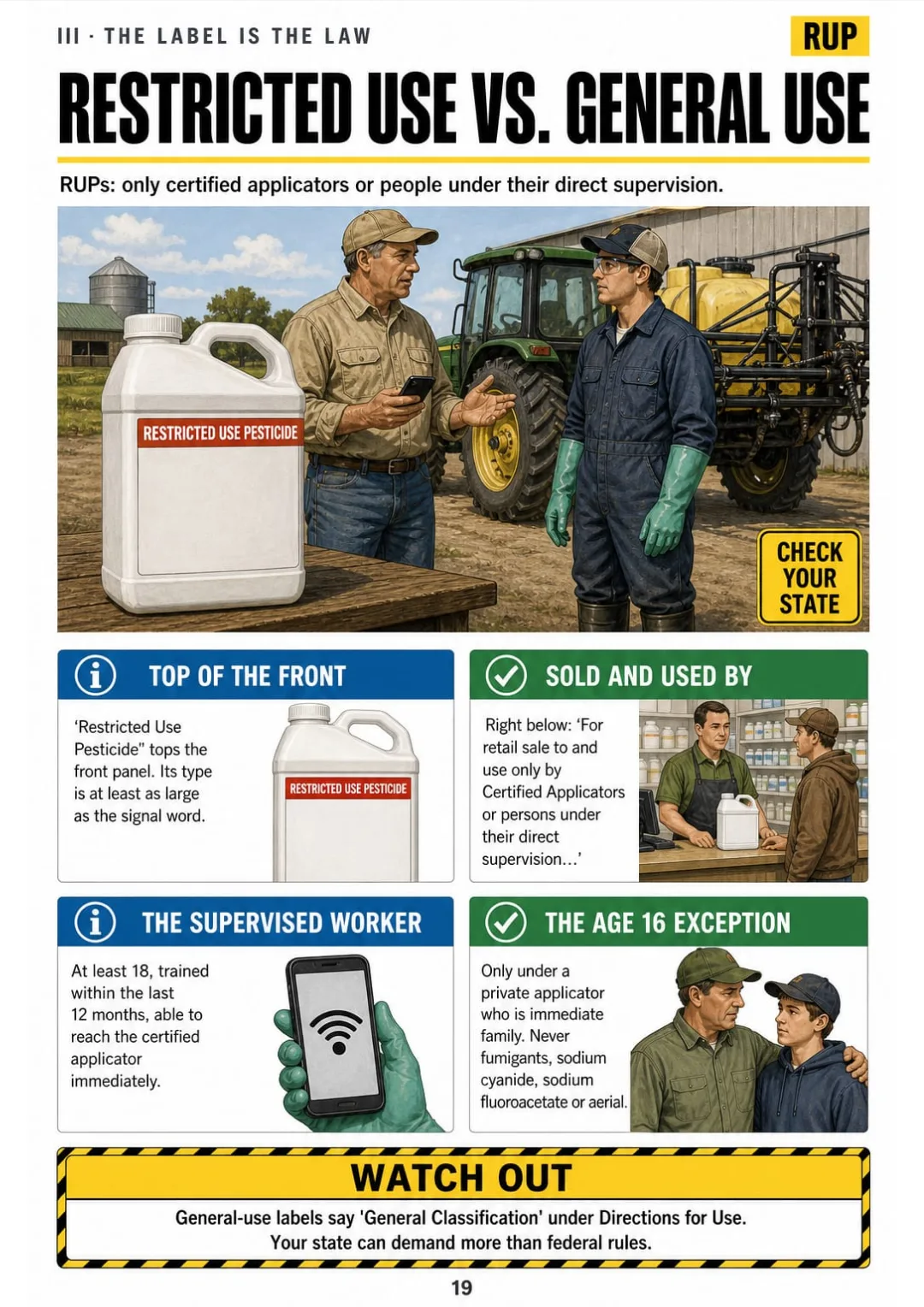
The RUP banner, who may apply it, and what direct supervision requires.
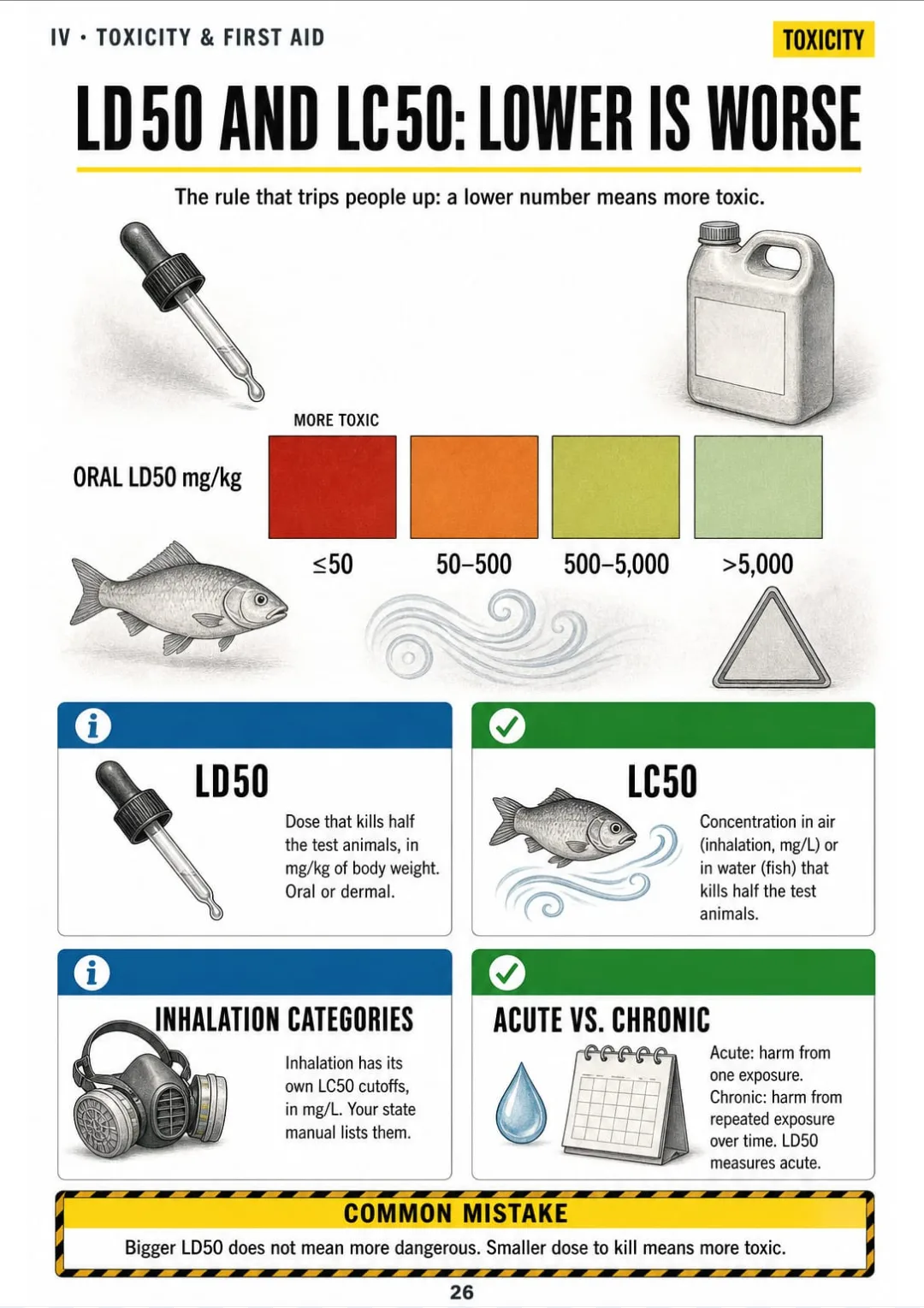
Oral LD50 ≤50 mg/kg = Category I = DANGER.
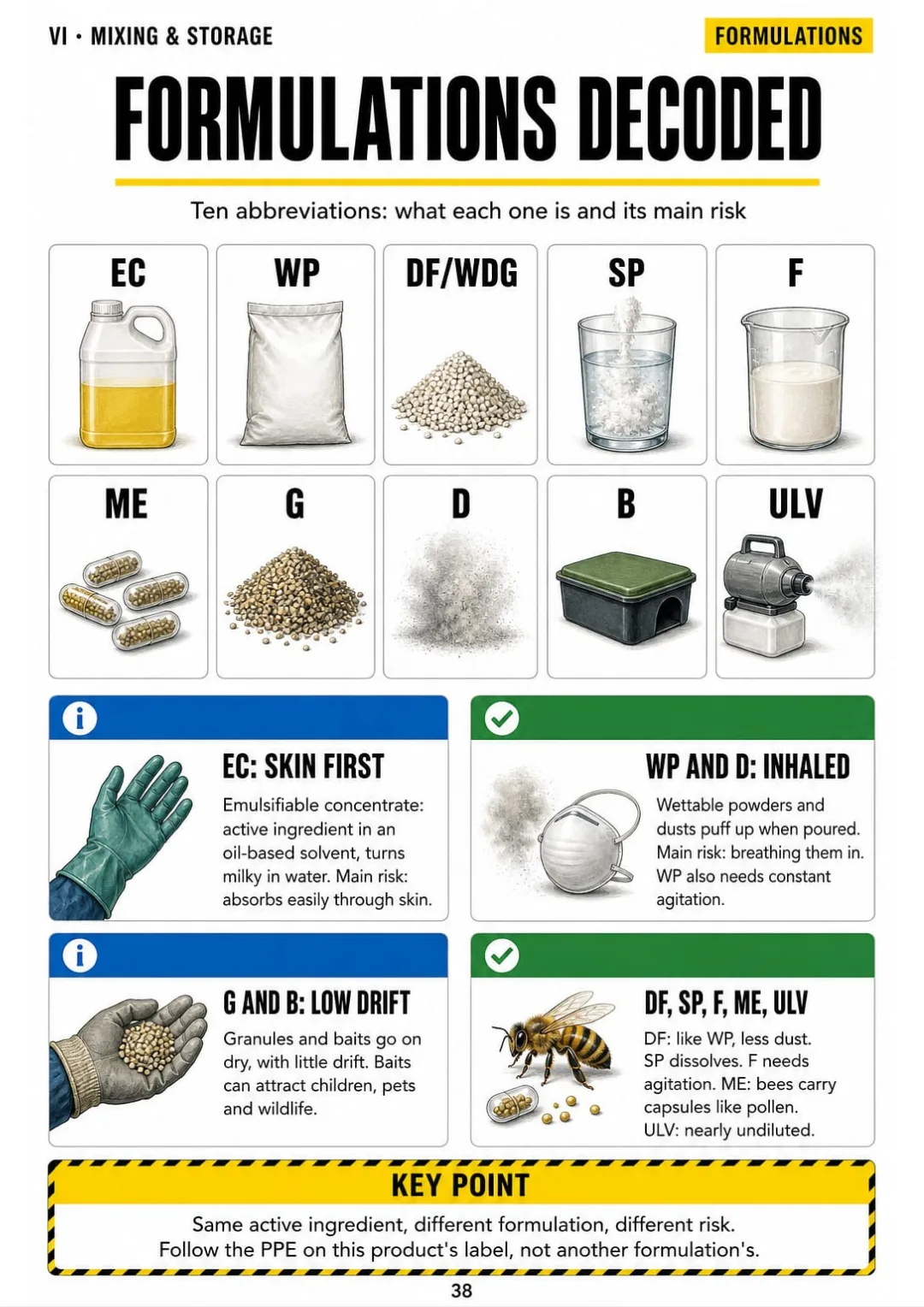
EC, WP, DF/WDG, SP, F, ME, G, D, B, ULV: what each is and its main risk
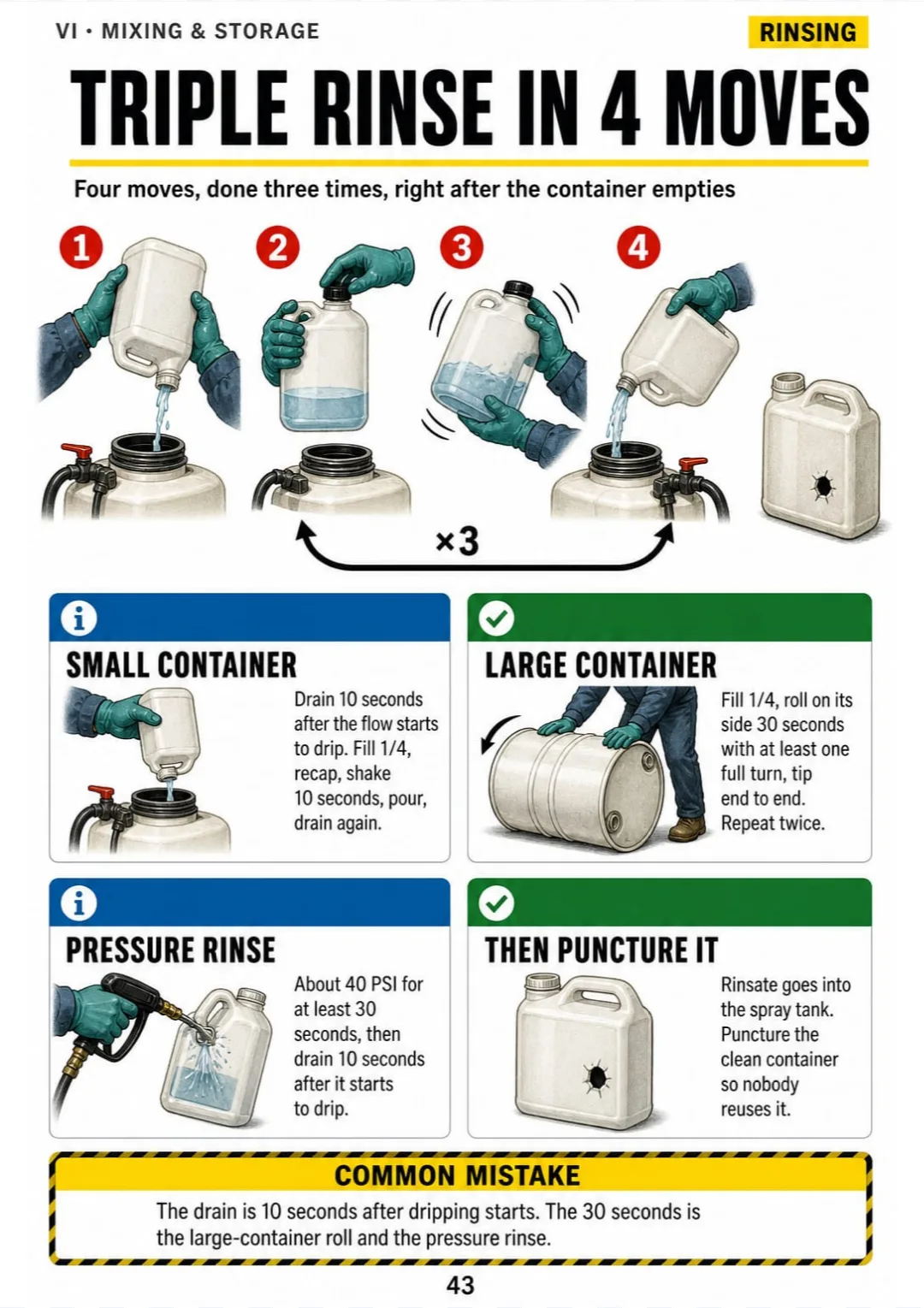
Drain 10 s · fill 1/4 · shake 10 s · pour into the tank · repeat 2 more times
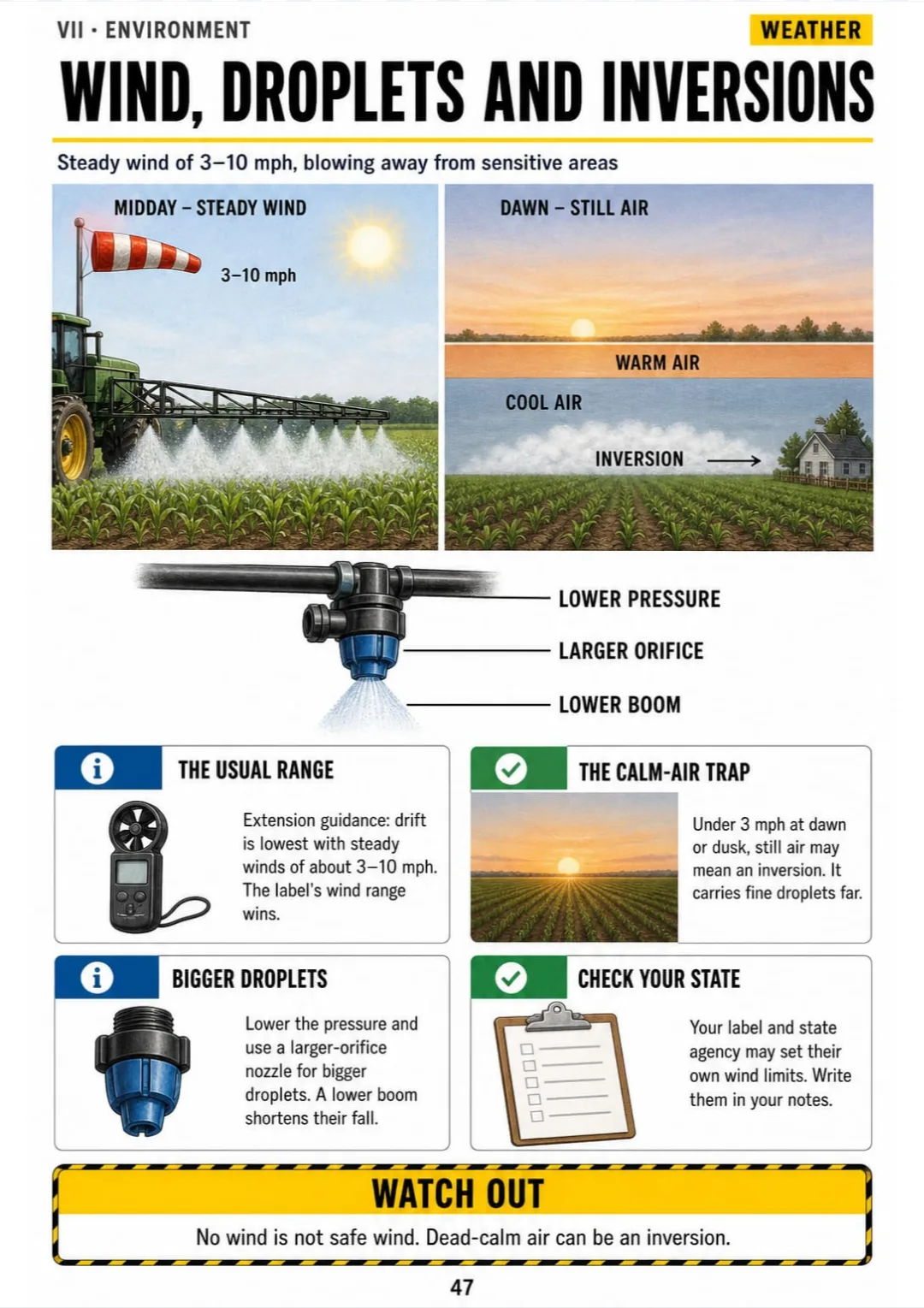
Spray in steady 3–10 mph wind; calm air under 3 mph may hide an inversion.
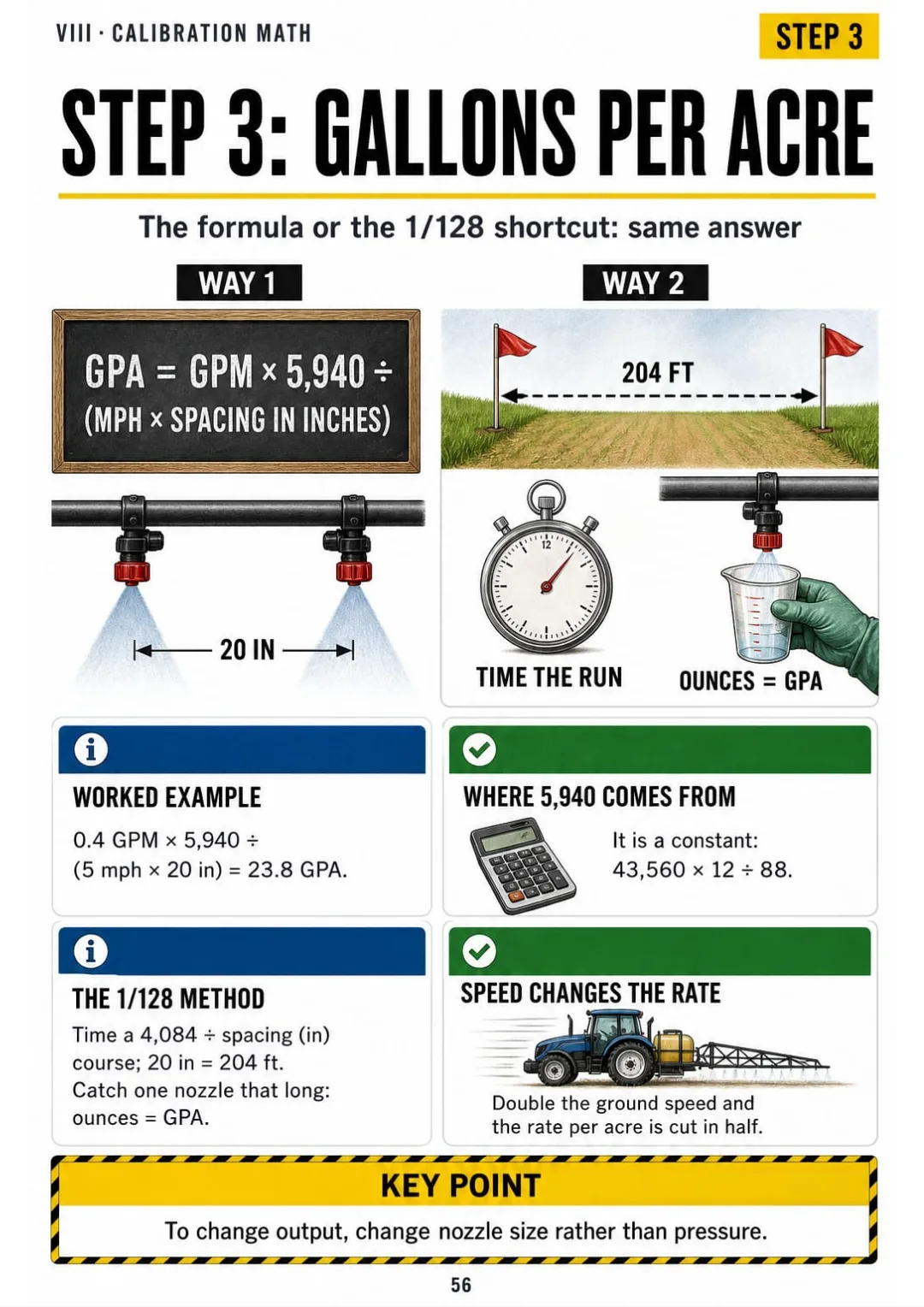
0.4 GPM, 5 mph, 20 in spacing = 23.8 gallons per acre
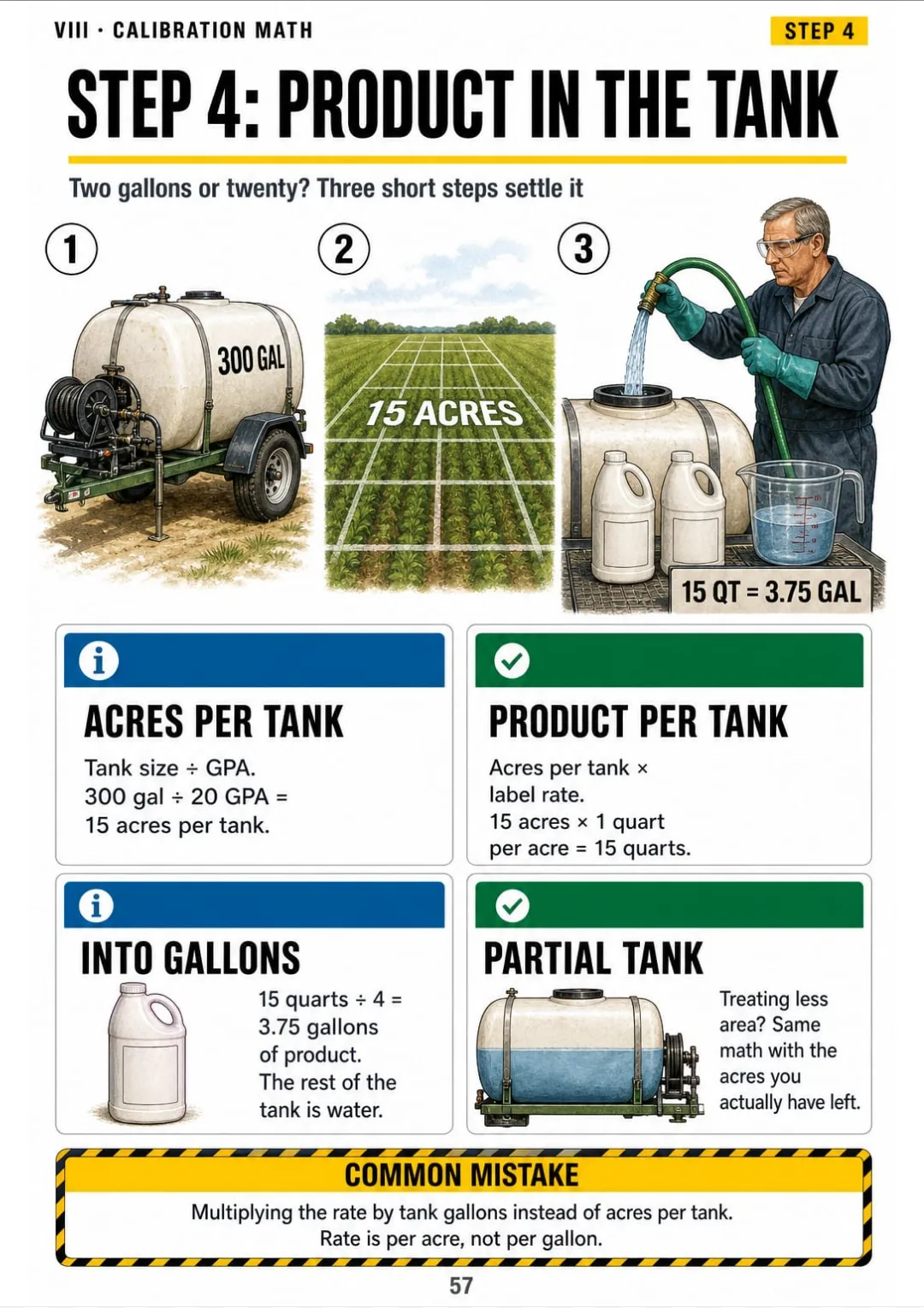
300 gal ÷ 20 GPA = 15 acres · 15 quarts = 3.75 gallons of product
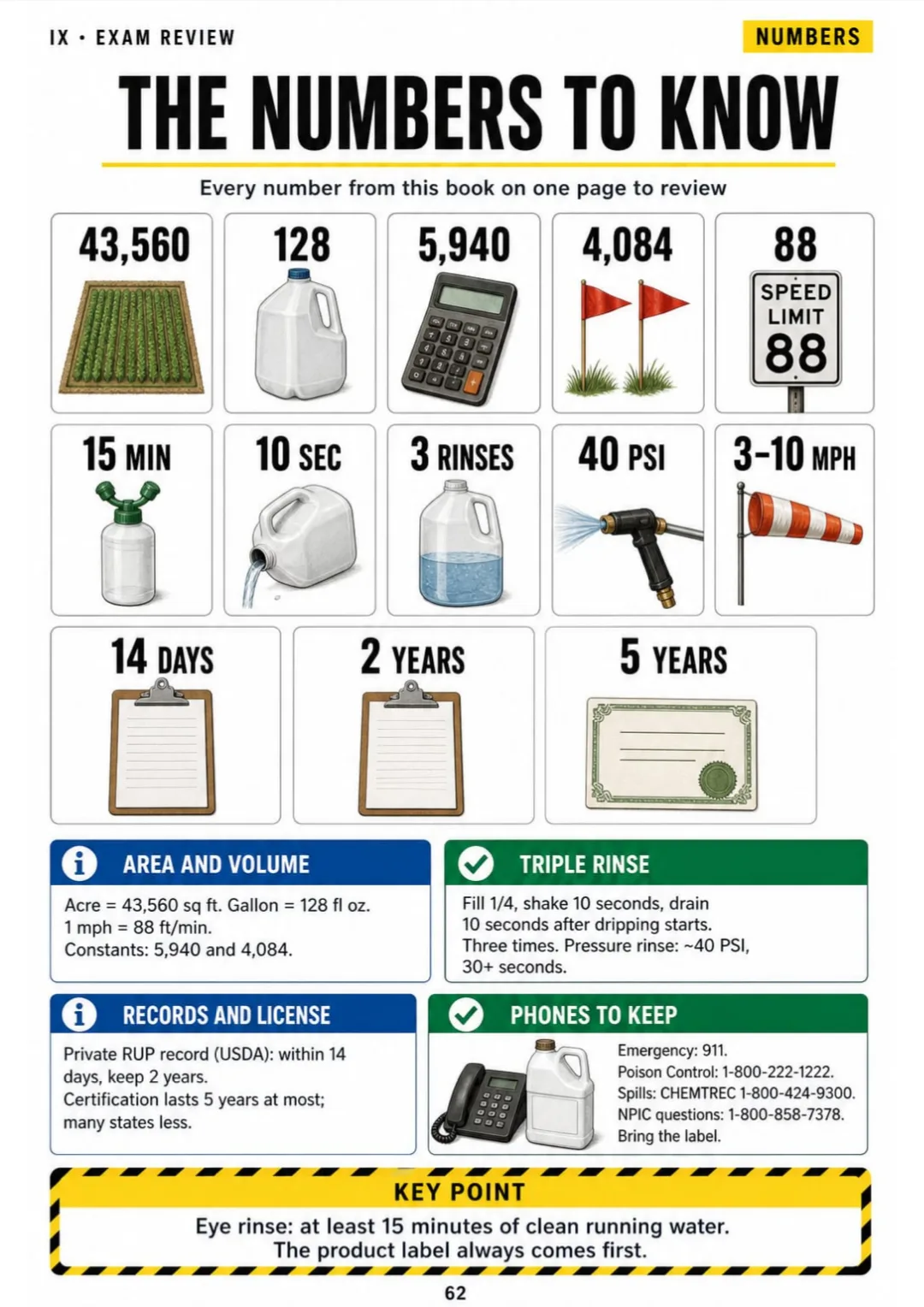
43,560 · 128 · 5,940 · 15 minutes · 14 days and 2 years: all the numbers together

Swipe to see more →

These are real pages from the book. The table of contents is the full one: 9 parts and 61 topics.

The Problem Isn't You. It's How It Was Explained to You.

You're at the mixing site with two jugs. One says EC, the other says WDG. You know they don't go in the tank the same way, but you can't say why.

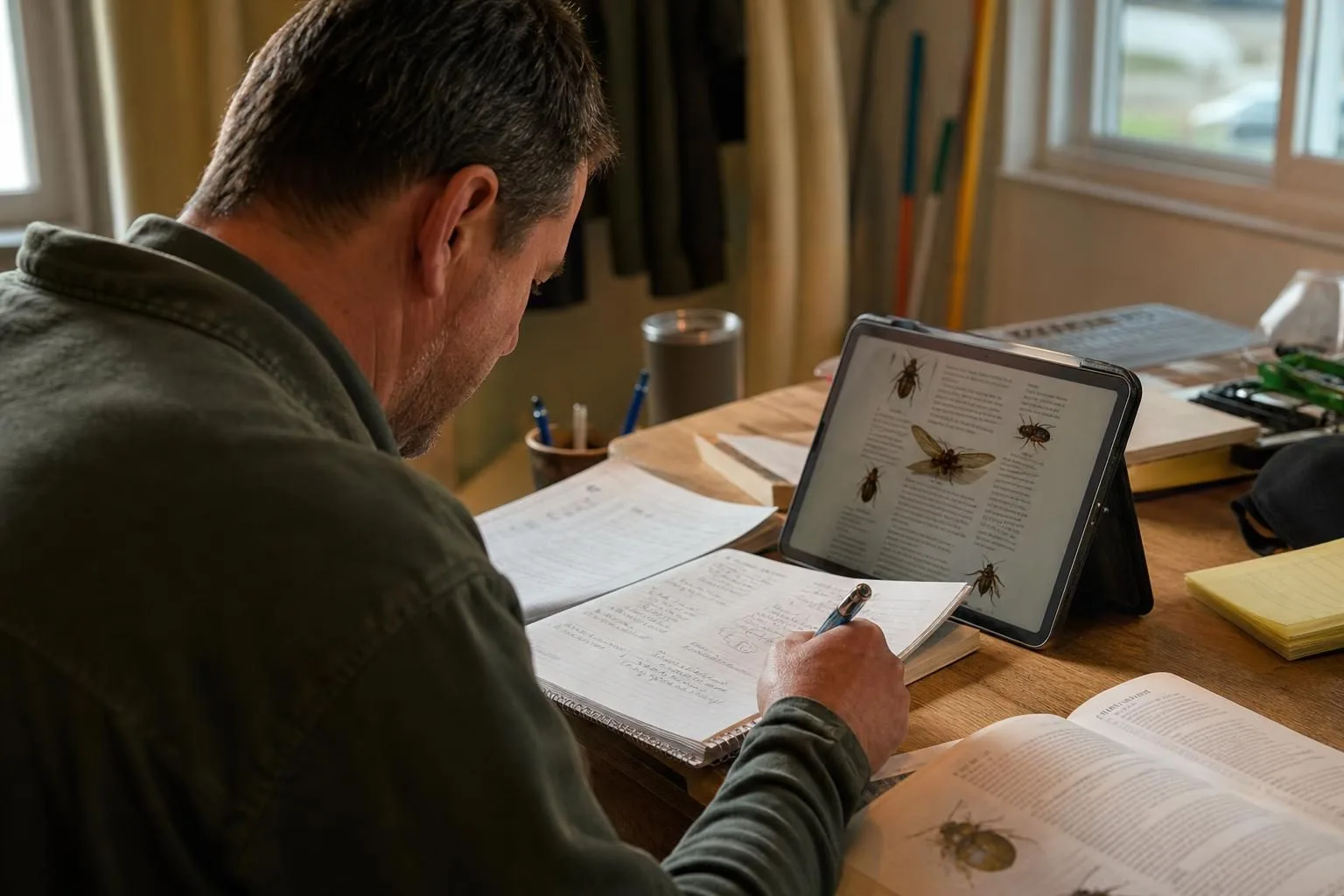
The manual covers formulations in pages of paragraphs: emulsifiable concentrates, wettable powders, dry flowables, soluble powders. Ten abbreviations, all words, and no picture to tell them apart.

EC, WP, DF/WDG, SP, F, ME, G, D, B, ULV: what each is and its main risk

In this book, formulations are one page: EC, WP, DF/WDG, SP, F, ME, G, D, B and ULV, each with its own drawing and its main risk. And the tank-mix order has its own page: which one goes in first, and why.

The same goes for the label part by part, LD50 and signal words, putting PPE on and taking it off, the triple rinse and the tank math: each one has its own page.

You read the jug, you know what's inside and how to handle it, and you don't have to go back to the manual.
COMPARE FOR YOURSELF

Same Topic, Two Ways to Study It

THIS
  • The manual: line after line
  • LD50 and signal words explained only in words
  • You walk into the exam with doubts
The acute toxicity of a pesticide is commonly expressed as the median lethal dose (LD50) or median lethal concentration (LC50), defined as the quantity of active ingredient, in milligrams per kilogram of body weight or milligrams per liter of air, required to kill 50 percent of a test animal population under controlled conditions. Because the value represents the amount needed to produce mortality, an inverse relationship exists between the numerical value and toxicity; products with lower values are therefore assigned to higher toxicity categories and carry more stringent signal words.
FOR THIS
  • LD50 and the toxicity categories in one drawing
  • The numbers in one box
  • You see it and you get it
Oral LD50 ≤50 mg/kg = Category I = DANGER.
CONTENTS

Take a Look at the 9 Parts and 61 Topics

The exam and your license, pests and IPM, the label, toxicity and first aid, PPE, mixing and disposal, the environment, calibration math and exam review: 65 pages, all illustrated

IStart Here: The Exam and Your License · pp. 5-8
  1. Private vs. Commercial Applicator: Which License You Need
  2. How the Core Exam Works
  3. How to Use This Book: One Page a Night
  4. The Core Topics on One Map
IIPests, Pesticides and IPM · pp. 9-15
  1. Know the Pest First: Insects, Weeds, Diseases, Vertebrates
  2. The Disease Triangle
  3. IPM in 5 Steps
  4. Thresholds: When Is Spraying Worth It?
  5. Control Methods Side by Side
  6. Pesticide Types: Contact vs. Systemic, Selective vs. Nonselective
  7. Resistance: Why the Same Product Stops Working
IIIThe Label Is the Law · pp. 16-24
  1. Who Makes the Rules: Federal and State
  2. The Label Drawn and Labeled, Part by Part
  3. Signal Words: DANGER, WARNING, CAUTION
  4. Restricted Use vs. General Use
  5. Directions for Use: Rate, Site, Pest, Timing
  6. REI and PHI: Two Intervals People Mix Up
  7. Precautionary Statements and Environmental Hazards
  8. Labeling vs. Label, and the SDS
  9. Records: What to Write Down After Every Application
IVToxicity, Exposure and First Aid · pp. 25-31
  1. Hazard = Toxicity × Exposure
  2. LD50 and LC50: Lower Means More Toxic
  3. Four Routes of Exposure on One Body
  4. Where Skin Absorbs the Most
  5. Signs of Poisoning: Mild, Moderate, Severe
  6. First Aid by Route
  7. Heat Stress Under PPE
VPPE: Suit Up and Strip Down · pp. 32-37
  1. Read the PPE Box First
  2. Gloves and Boots: Sleeves and Pant Legs Go Outside
  3. Eye and Face Protection
  4. Respirators: Type, Filter and Fit
  5. Putting PPE On, Step by Step
  6. Taking PPE Off and Washing It
VIMixing, Loading, Storage and Disposal · pp. 38-45
  1. Formulations Decoded
  2. Adjuvants: What They Add to the Tank
  3. The Mixing and Loading Site
  4. Air Gap and Backflow Prevention
  5. Tank-Mix Order and the Jar Test
  6. Triple Rinse in 4 Moves
  7. Storage: Locked, Labeled, Ventilated
  8. Spills: Control, Contain, Clean Up
VIIProtecting the Environment · pp. 46-51
  1. Particle Drift vs. Vapor Drift
  2. Wind, Droplets and Inversions
  3. Groundwater and Surface Water
  4. Bees and Pollinators
  5. Endangered Species and Nontarget Animals
  6. Sensitive Areas and People Nearby
VIIICalibration Math in 4 Steps · pp. 52-60
  1. Why Calibrate: Too Much, Too Little
  2. Units on One Page
  3. Step 1: Measure the Area
  4. Step 2: Measure Your Speed and Nozzle Output
  5. Step 3: Gallons per Acre, Two Ways
  6. Step 4: How Much Product Goes in the Tank
  7. Lawn Math: Rates per 1,000 Square Feet
  8. Backpack and Hand Sprayers
  9. Granular Spreaders and Percent Active Ingredient
IXExam Review · pp. 61-65
  1. Pairs That Get Mixed Up
  2. The Numbers to Know
  3. Most Common Calibration Mistakes
  4. Reading an Exam Question
  5. Exam-Day Checklist and Your State

One Page, One Topic, All Clear

Think of it this way:

It's the night before the core exam. A practice question gives you a 300-gallon tank, a rate per acre and a sprayer putting out 20 gallons per acre. You have to pick the right amount of product.

You open the Step 4 page and it's drawn: the tank, the 15 acres it covers, the quarts per acre and the product that goes in, worked out in the same order every time.

Spray in steady 3–10 mph wind; calm air under 3 mph may hide an inversion.

Same with the label part by part, LD50 and signal words, formulations, drift and inversions, and the triple rinse: each one on its own page.

Pesticide Core Exam Illustrated is 9 parts and 61 topics, all drawn, and the last part is exam review: the pairs that get mixed up, the numbers to know and the most common calibration mistakes.

What you see drawn, you don't have to memorize.

What's Inside Pesticide Core Exam Illustrated:

Ipp. 5-8

Start Here: The Exam and Your License

Private vs. commercial license, how the core exam works, how to study one page a night and all the core topics on one map

IIpp. 9-15

Pests, Pesticides and IPM

The pest groups, the disease triangle, IPM in 5 steps, thresholds, control methods, pesticide types and resistance

IIIpp. 16-24

The Label Is the Law

Federal and state rules, the label part by part, signal words, restricted vs. general use, rate and timing, REI and PHI, the SDS and records

IVpp. 25-31

Toxicity, Exposure and First Aid

Hazard = toxicity × exposure, LD50 and LC50, the four routes of exposure, signs of poisoning, first aid by route and heat stress

Vpp. 32-37

PPE: Suit Up and Strip Down

The PPE box on the label, gloves and boots, eye protection, respirators, and putting PPE on and taking it off step by step

VIpp. 38-45

Mixing, Loading, Storage and Disposal

Formulations, adjuvants, the mixing site, air gap and backflow, tank-mix order and the jar test, triple rinse, storage and spills

VIIpp. 46-51

Protecting the Environment

Particle vs. vapor drift, wind and inversions, groundwater, bees and pollinators, endangered species and sensitive areas

VIIIpp. 52-60

Calibration Math in 4 Steps

Why calibrate, units on one page, then the 4 steps: area, nozzle output, gallons per acre and product in the tank, plus lawn, backpack and granular math

IXpp. 61-65

Exam Review

The pairs that get mixed up, the numbers to know, the most common calibration mistakes, how to read a question and the exam-day checklist

At the end of the book: An exam review part with the pairs that get mixed up, the numbers to know and the most common calibration mistakes.

Plus: 2 Free Books

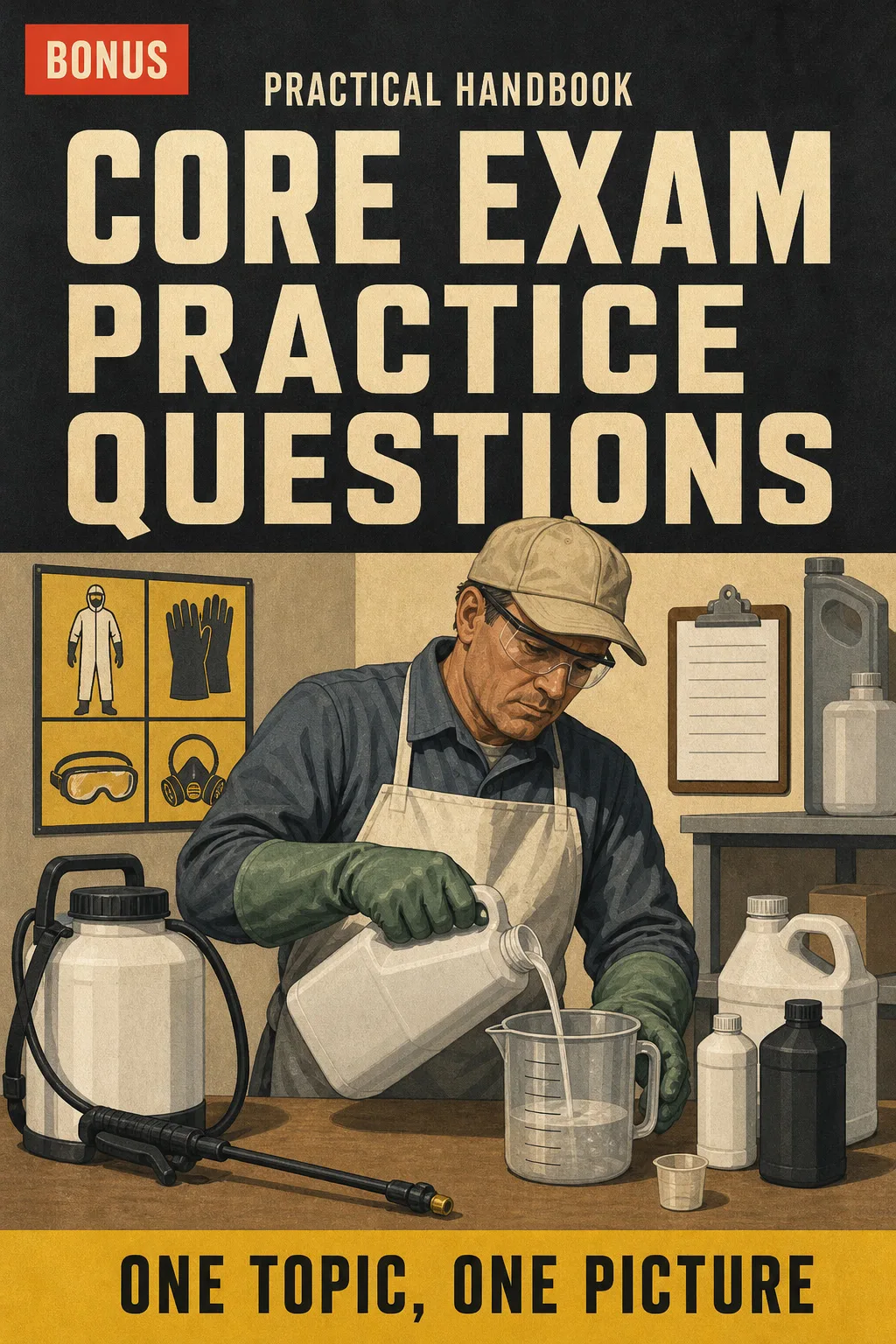
Core Exam Practice Questions

BONUS 1: «Core Exam Practice Questions»

Value on its own: US$ 17.90

Exam-style questions on every core topic, with the answer explained right below, so you find your weak spots before exam day instead of during it.

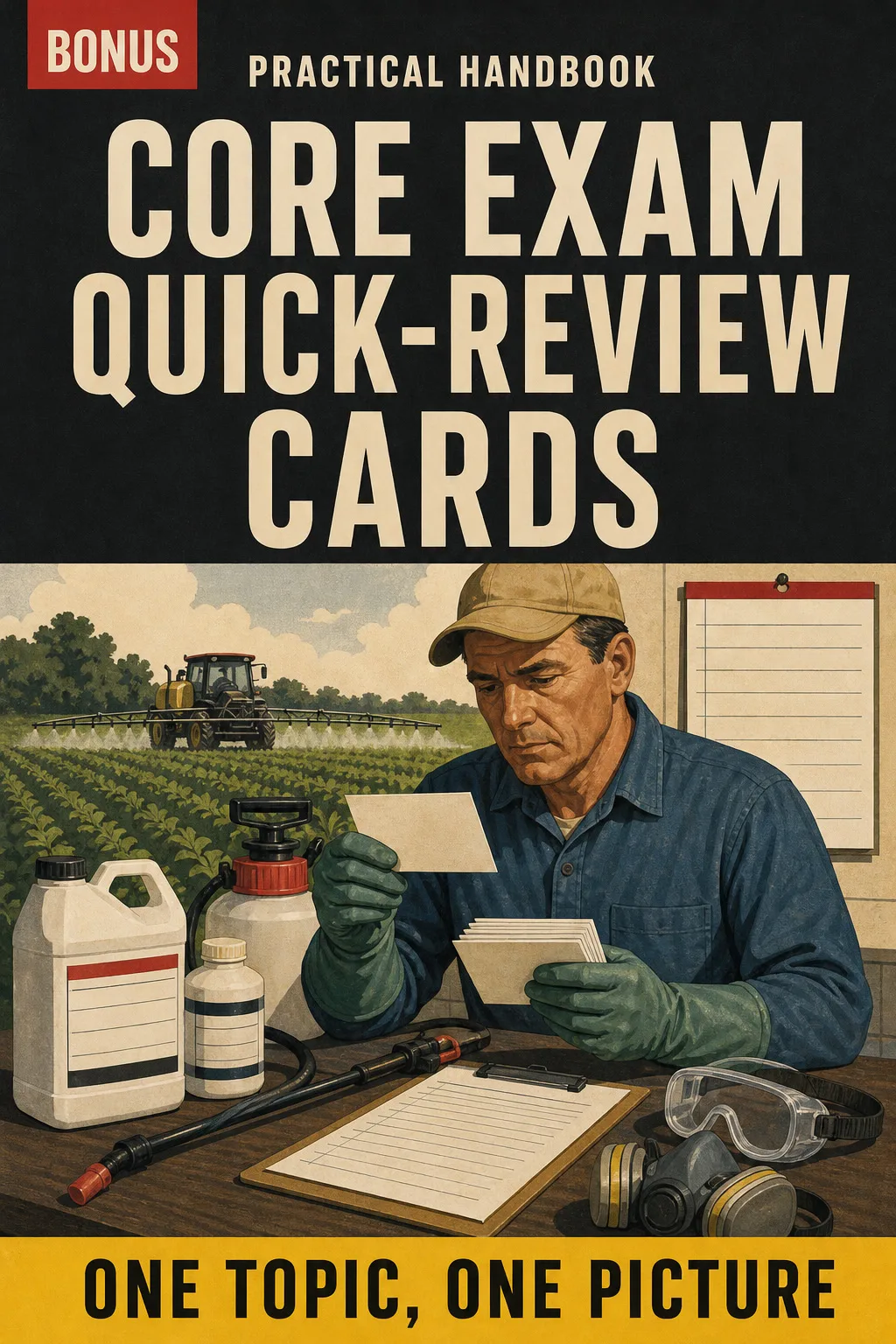
Core Exam Quick-Review Cards

BONUS 2: «Core Exam Quick-Review Cards»

Value on its own: US$ 14.90

One card per topic with what you need to know at a glance, to print and review in the truck or the night before the exam.

Pesticide Core Exam Illustrated with 2 Free Books

  • Pesticide Core Exam Illustrated: 65 illustrated pagesUS$ 63
  • BONUS 1: Core Exam Practice QuestionsUS$ 17.90
  • BONUS 2: Core Exam Quick-Review CardsUS$ 14.90
  • High-resolution PDF to printIncluded
Total value US$ 95.80
YOUR PRICE:
US$ 27
You save US$ 68.80
YES, I WANT PESTICIDE CORE EXAM ILLUSTRATED FOR US$ 27

📄 This is a digital PDF book sent to your email: nothing is printed or shipped.

Secure purchaseEncrypted payment30-day guarantee

PDF by email: We email you Pesticide Core Exam Illustrated as a PDF, together with the two free books. It's a single payment: no installments, no extra charges.

Who This Book Is For

You're studying for the core exam

You're studying for the core exam

One page a night instead of a whole chapter. You see the label, the PPE and the tank math drawn, and it's still there the next morning.

Your exam date is close

Your exam date is close

The review part puts the pairs that get mixed up and the numbers to know side by side, so you check your weak spots before you sit down.

You already spray for a living

You already spray for a living

You've done the work for years; now you see the reason behind each step and do the calibration yourself, always in the same 4 steps.

Everything You Get Today

US$ 95.80US$ 27
YES, I WANT PESTICIDE CORE EXAM ILLUSTRATED FOR US$ 27

📄 This is a digital PDF book sent to your email: nothing is printed or shipped.

30DAYS
GUARANTEE

30-Day Guarantee

Try Pesticide Core Exam Illustrated for 30 days, bonus books included.

We refund everything if the file won't open, if the book isn't what you see here, if you were charged twice or if the email doesn't arrive. Just email us.

You pay once. No subscriptions.

Frequently Asked Questions

Is it for me if I haven't taken an exam in 20 years and math isn't my thing?

Yes. Each topic is one drawn page, and the calibration starts from zero: units first, then the same 4 steps with worked examples in gallons, acres and square feet.

Does it work for my state's core exam?

Yes, for the core exam. It's checked against the national core manual most states use, the federal applicator certification rule (40 CFR Part 171) and FIFRA. Each state writes its own exam, so every page has a 'Check your state' box for what can change, and you confirm it with your state's manual and agency. It covers the core exam, not the category exams like turf, ornamental or structural.

Is it official material?

No. It's an independent study book, not affiliated with or endorsed by the EPA or any state agency. It works alongside your state's manual.

Does it replace the course or required training?

No. It's a study aid. It doesn't give you a license, a certificate or recertification credits, and it doesn't replace your state's training, the product label, which is the law, or medical care. In a poisoning emergency, follow the label and call Poison Control or 911.

Are the practice questions the ones on the exam?

No. They're written for this book, in the style of the core exam, to help you find your weak spots. They aren't official questions from any exam.

When and how do I get it?

In PDF by email, at the address you enter at checkout, together with the 2 bonus books.

Do I have to pay every month?

No. It's a one-time payment. No subscription.

Can I have it on paper?

Yes. The PDF is ready to print at home or at a print shop, so you can keep it in the truck.

How does the refund work?

You have 30 days. We refund everything if the file won't open, if the book isn't what you see on this page, if you were charged twice or if the email doesn't arrive: just email us.

Before You Close This Page

No more rereading the manual with nothing sticking.

The label, the PPE box and the tank math: you see them drawn, and that's it.

You walk into the core exam knowing where everything is.

Drawings make studying faster.

The book is right below.

One-time payment: US$ 27 · Guarantee: 30 days · PDF by email

YES, I WANT PESTICIDE CORE EXAM ILLUSTRATED FOR US$ 27

📄 This is a digital PDF book sent to your email: nothing is printed or shipped.